

Making Voices Heard

While the stances of many are considered through liberal and democratic governance, decision making is often left in the hands of the political elite and high ranking members of self interested institutions. To circumvent this muting of public discourse, many people have taken matters into their own hands — some becoming philosophers, some creating stages to voice their own ideologies, and others expressing their qualms through artistic mediums. We may live in a society that prioritizes utilitarian values of the good of the majority over individual rights, but that doesn’t stop people from making their voices heard and fighting in the name of their beliefs. I’d like to address a few outspoken individuals that have given rise to change, and have brought great attention to issues that would otherwise remain invisible.
The Encampments at Columbia University
On April 17th, 2024, a group of Columbia University students passionate about the state of Palestinian affairs in Gaza (concerning the conflict with Israel), decided to draw from their predecessors (the 1968 Columbia protests against the war in Vietnam), and established encampments on the East Side Lawn of the Morningside Heights campus. This effort arose from the university’s lack of action when faced with the pleas of students who desired Columbia to divest from organizations supporting Israel's militant efforts. Over the course of two weeks, more and more students gathered on the lawn to peacefully protest the war in Gaza and Columbia’s contribution to it. Led by individuals like Mahmoud Kalil and Layla Saliba, the movement set forth proposals to Columbia that were rejected time and time again, which were instead met with alternatives that would ultimately serve no good for the goals the group set forth. When it was clear a consensus would not be reached among the two opposing forces, Columbia University called upon the NYPD to clear out protestors in a highly charged event that violated the First Amendment right of freedom of speech. The NYPD detained students and exerted tactical force by charging barricades in riot gear, and utilizing pepper spray against peaceful protesters.

Though the protest at Columbia did not fulfill its goal of divestment, they created a movement that spread like wildfire among college campuses worldwide, with their solidarity efforts resonating in the hearts of Palestinians. This is an example of the ways in which those in power suppress the voices of certain individuals, and showcases the inspiring efforts of groups to make their voices heard despite opposition. I highly recommend watching “The Encampments” by Kei Pritsker and Michael Workman, which follows the entire event and grants the students a platform to talk about an issue so close to their hearts.
Political Expression in the Form of a Banksy
Banksy is an anonymous street artist based in England, who voices his political perspectives through artistic mediums like wall art and sculpture. Most recently, Banksy created a sculpture which he placed in central London on April 30th of this year. His work depicts a man blinded by the flag he carries, walking unknowingly on unsolid ground. It seems to address King Charles and his relationship with Donald Trump, which stemmed from the state dinner and subsequent congress hearing that took place on April 28th. Banksy’s art is not something to simply admire, it is something that incites awareness into all who witness it, and may even cause people to rethink their views on certain public affairs.

Banksy also incorporates environmental issues into his art, with perhaps one of my favorites depicting a child happily catching snowflakes on his tongue, which turned out to be air pollution from a dumpster fire. I think on occasion images can say more than words, and art can inspire great emotions within people that can actively change the perspectives of those affected.

Grassroots Activism — LANDBACK
The LANDBACK movement is an indigenous led campaign that aims to reclaim stolen ancestral lands, to build a political platform for Native advocation, and to once again create a stewardship relation with the environment that promotes sustainability. The history of colonialism is one of the forced eviction of Natives from their lands, paired with the advent of industrialization which has exploited natural capital while disregarding the systemic effects these actions have on our biosphere. LANDBACK itself stands for and can be understood as: Learning of the first inhabitants of the land you live with, accepting accountability in settler colonial participation, nurturing the land you live on, divesting from extractive industries, being open to equitable and sustainable lifestyles, allocating time to water and land protection, co-creating relationships of consent, and keeping an open heart as it pertains to the transformation towards a more harmonious world.
While advocating for their communities, the LANDBACK movement also brings awareness towards our destruction of the planet that has been exacerbated by capitalist drive and production, and supplies us with ideas and political reforms that work to benefit nature and human wellbeing. Some of their work includes rallying against the implementation of pipelines — as seen in the Dakota Access Pipeline — which violated established treaties and polluted surrounding bodies of water. Their work serves as a powerful example of the ways we can change our society for the better while creating more grounds for sustainable development.
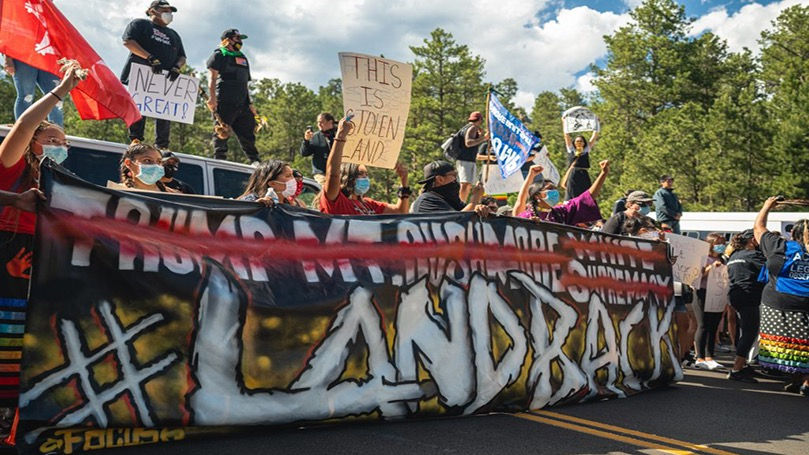
The aforementioned groups and individuals are just a few examples of people that have put themselves on the line and publicly expressed their ideologies in hopes of creating much needed change. Columbia’s encampment scenario has awakened the political consciousness of individuals all over the world, and has given support to Palestinians struggling in the wake of war. Banksy’s art draws attention from even the least politically or environmentally concerned crowds, and can resonate with them in ways that promote change within themselves and their communities. The work conducted by LANDBACK has given rise to sustainable development and the implementation of environmentally beneficial reforms, all the while advocating on behalf of historically wronged and marginalized communities. The importance of empowering the voices of progressive thinkers is clear to see when one stops to think about the ways in which their efforts have ultimately resulted in a better world for the rest of us living in it. I hope this post evokes a curiosity in people that leads them down a road of better political and ecological understanding, all the while publicizing groups who are doing incredible work around the globe.


kèo nhà cái mình thấy bạn bè nhắc suốt nên cũng bấm vào nghía thử cho biết. Mình không đọc kỹ nội dung đâu, chỉ lướt qua xem trang họ làm có dễ nhìn không. Ấn tượng ban đầu là giao diện khá sáng sủa, khoảng cách giữa các phần vừa đủ nên kéo xuống không bị rối. Mấy khối thông tin được chia tách rõ ràng, nhìn cái là biết đang ở đoạn nào chứ không bị dính chùm vào nhau. Mình cũng để ý thanh menu đặt ngay chỗ dễ thấy nên đổi qua lại mấy mục khá nhanh, không phải mò mẫm. Nói chung kiểu trình bày gọn gàng, nhất là cách họ để menu điều hướng…
Bài viết dễ đọc và có nhiều chi tiết thú vị, cảm ơn bạn đã chia sẻ. Đoạn bạn nói về việc mở thêm văn phòng và chỗ quay motion capture đúng cái mình đang thắc mắc bấy lâu. Mình thì hay theo dõi thống kê XSMB mỗi ngày nên tự gom dữ liệu lại thành một trang cho tiện tra cứu. Ai cần xem cập nhật theo ngày thì ghé http://www.askmap.net/location/7882248/vietnam/soicauxsmbpro
Trước đây mình loay hoay khá lâu mới chọn được addon Minecraft PE hợp với resource pack để cài cho mượt. Mình thường canh mấy shader nhẹ dành cho máy yếu, rồi đổi thêm vài map mới cho thế giới bớt nhàm và nhìn phong phú hơn. Nghe nhiều bạn trong cộng đồng chia sẻ thì mấy addon kiểu furniture hay alien invasion trên thuvienmc, nhất là có đánh giá sao rõ ràng, thường đỡ mất công thử đi thử lại. Nên mình ít khi tải theo lời truyền miệng, mà ưu tiên nơi nào cập nhật đều và dễ kiểm tra nguồn. thuvienmc. Nếu cần chỗ lấy addon Minecraft PE, resource pack và map miễn phí thì mình hay…
Mình thường lướt tin về bitcoin rồi xem thêm vài góc nhìn phân tích kỹ thuật để nắm nhịp tăng giảm của thị trường crypto mỗi ngày. Có những bài dự đoán giá kèm cập nhật altcoin, memecoin thì mình dễ ghép lại bức tranh tổng thể hơn trước khi quyết định vào lệnh hay tạm đứng ngoài. Mình hay ghé https://tapchibitcoin.io/ để đọc nhanh, sau đó tự mở chart lên đối chiếu lại cho chắc. Thỉnh thoảng mình cũng xem chia sẻ trong cộng đồng, nhiều người khuyên nên tham khảo thêm phân tích on-chain và mấy tin vắn được chọn lọc vì thường bám dữ liệu thực tế hơn. Với các coin lớn như ETH, XRP hay SOL,…
Mình chơi xổ số kiểu giải trí là chính, chủ yếu mở kết quả lên xem cho vui chứ không đặt nặng chuyện đổi đời. Trước đây nghe bạn bè rỉ tai đủ loại “cầu” với mẹo này nọ, mình cũng thử quan sát một thời gian cho biết. Theo dõi lâu hơn thì thấy đôi lúc có vài chi tiết lặp lại khiến mình chú ý, nhưng mình vẫn nhắc bản thân đừng quá tin. Mỗi lần đọc mấy bài nhận định, mình hay ghi ra vài ý ngắn gọn rồi chờ kết quả để đối chiếu, coi có phải mình đang tự gán ghép không. Trúng chút thì vui, còn sai thì coi như trải nghiệm. Dạo gần…