

Climate Change and Inequality in the World

Climate change is one of the biggest problems facing the world today. As years go by, the effects of climate change become more evident through stronger hurricanes, floods, wildfires, and rising sea levels. While climate change impacts the entire planet, its consequences are not distributed equally across the world. Poorer communities and developing countries often face much more severe environmental impacts, despite contributing the least to global carbon emissions. Understanding these issues from a biological and philosophical perspective helps to show that climate change isn’t only an environmental issue but also a political, economic, and ethical challenge that can be linked back to inequality, capitalism, and overall responsibility regarding our individual and collective actions, and the things we do to contribute harm to ecosystems.
Moreover, when viewing this from a biological perspective, climate change is a major threat to ecosystems, biodiversity, and overall human health. Climate change - driven primarily by anthropogenic greenhouse gas emissions - disturbs the natural systems of the biosphere and increases the chances of extreme weather events and natural disasters. Biologists have documented rising sea levels, melting glaciers, stronger storms, and shifts in ecosystems that can place many species at risk of extinction. Not only that, but climate change can also cause food insecurity when there are constant changes in the environment, which makes it difficult for farmers to harvest. Developing countries are especially vulnerable to this because they often lack the resources to recover from environmental disasters. On the other hand, wealthier countries have adequate technology, emergency systems, and sturdy buildings, often provided by resources extracted from developing countries, which makes the people who live there more vulnerable to the effects of climate change.
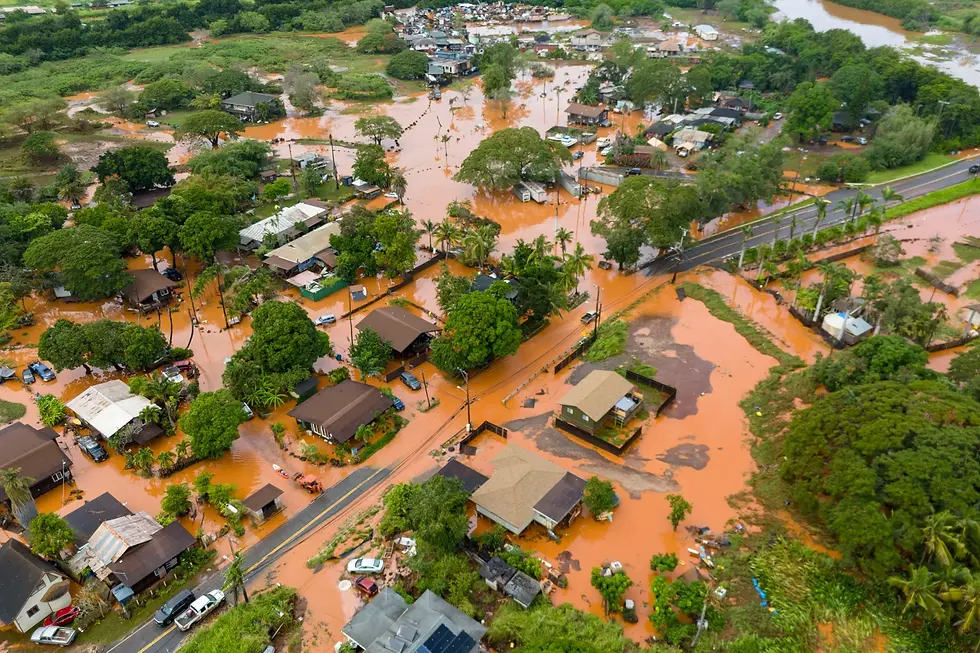
Climate change also creates major public health concerns. Increasing temperatures makes air pollution worsen and allows diseases to spread more easily. Marginalized groups often already face environmental problems such as polluted water, limited healthcare, and poor housing, making them more vulnerable to the effects of climate change. Interconnected ecosystems mean that disruption in one area can have widespread consequences for other areas. Climate change shows how environmental problems have global impacts on ecosystems, economies, and human lives simultaneously, rather than being isolated issues.
Climate change clearly impacts people unequally. One of the major themes of any global geopolitical analysis is the relationship between consumption, capitalism, and environmental destruction. It is clear that wealthier countries and larger corporations cause a majority of carbon emissions, while the poorer, developing countries experience the consequences of this economic development. This dynamic raises important questions about responsibility and justice. Is it fair for those contributing least to climate change to suffer the most?

One framework for understanding parts of this dynamic is the “Tragedy of the Commons,” which states when resources are shared, individuals acting in their own self-interest may overuse and destroy those resources. Climate change reflects this idea because many countries and corporations continue burning fossil fuels for economic growth, knowing that their actions have consequences that harm the global environment. However, many critics argue that the problem is not simply a selfish and greedy human nature, but economic systems that prioritize profit over environmental sustainability. Writers such as Peter Frase, Nancy Fraser, and Kohei Saito, debate whether technological innovation, a "greener" capitalism, or major social and political restructuring offer the best solutions to climate change.
Environmental justice argues that environmental harms often disproportionately affect marginalized communities based on race, class, and economic inequality. Poor neighborhoods are more likely to be located near pollution sources, such as factories, highways, or waste sites, which expose residents to greater health risks. Globally, poorer nations are often less prepared for climate disasters because of historical inequalities connected to colonialism and uneven economic development. Climate change, therefore, reveals how environmental issues are deeply tied to social inequality and political power.
Climate change cannot be solved through individual actions alone. People need to collectively change systems to find new ways to reduce material waste and conserve energy on a larger scale. This would require governments and corporations to take greater responsibility for protecting the environment. New policies for renewable energy investments and international cooperation are necessary to reduce greenhouse gas emissions and protect vulnerable populations and ecosystems. At the same time, philosophical debates about degrowth and sustainable development question whether endless economic growth is compatible with environmental sustainability. Many people in power encourage overconsumption and want to prioritize profit, making meaningful climate change mitigation actions difficult.
Before I started reading about these interconnected issues, I mainly focused on climate change as a biological issue, involving only pollution and rising temperatures, and other environmental factors. However, I now can understand that climate change is also oftentimes connected to politics, poverty, and global inequality. The people who suffer the most from environmental destruction are often those with the fewest resources to protect themselves from these rapid changes in their lives. Climate change is not only an environmental crisis, but also a moral and ethical issue about fairness and responsibility.

Overall, climate change and inequality are deeply connected issues. Biology shows how climate change damages ecosystems, threatens biodiversity, and harms human health, while philosophy reveals how political systems and economic inequality shape who suffers most from environmental destruction. Both disciplines demonstrate that environmental problems are also social and ethical problems. Solving climate change will require not only environmental protection and scientific technologies to support it, but also political change, economic reform, and greater global cooperation for a collective effort among the nations to address these challenges and find solutions.


Comments